
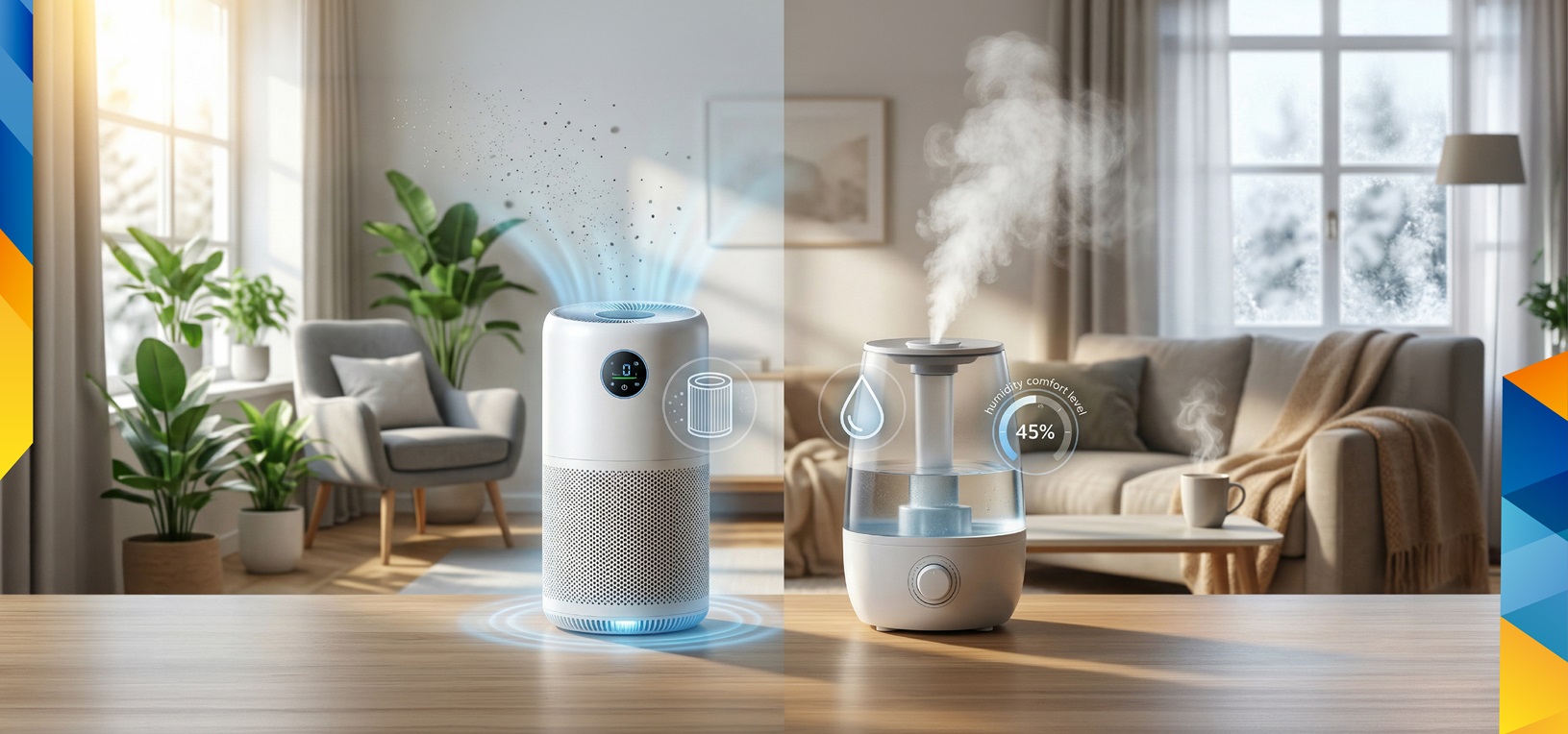
Not sure which device your home actually needs? Here’s the air purifier vs humidifier comparison every Canadian homeowner should know.
Understanding the air purifier vs humidifier comparison helps you choose the right indoor air quality devices for your home. The difference between humidifier and air purifier comes down to air cleaning vs humidity control. Air purifiers use airborne particulate filtration for allergen particle reduction, removing dust, smoke, and bacteria. Humidifiers support a humidity balance mechanism, easing respiratory irritation conditions during dry Canadian winters. Exploring air purifier and humidifier benefits makes choosing a humidifier vs purifier for home easier, improving indoor air quality regulation and overall comfort year-round.
What is an air purifier vs humidifier
Simply put, these are two very different home air quality devices. An air purifier focuses on airborne particulate filtration and allergen particle reduction, cleaning pollutants from your indoor air. A humidifier manages your humidity regulation mechanism, releasing water vapour or steam to increase moisture levels throughout your home. Depending on the type, it may emit hot steam, cool mist, or water vapour providing respiratory airway hydration and supporting overall indoor air quality balance.
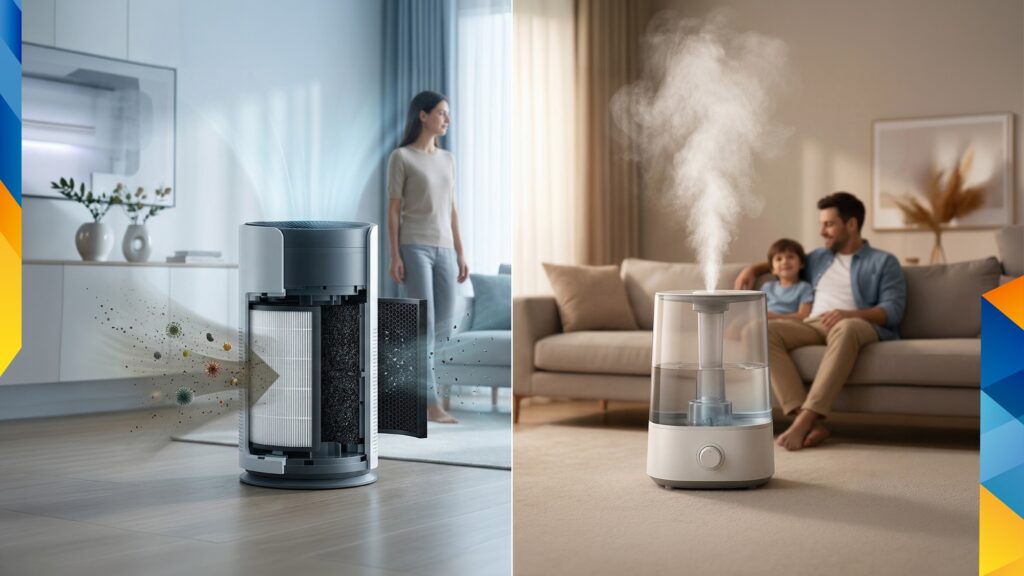
What Are the Differences Between Air Purifiers and Humidifiers
Understanding air purifier vs humidifier features helps you make the right choice for better indoor environment control at home. While both are popular home air quality solutions, knowing how purifiers differ from humidifiers is key. One focuses on air filtration vs moisture addition, using particulate matter filtration, while the other supports a humidity balance mechanism through environmental moisture regulation. This simple purifier and humidifier comparison guide breaks it down for you.
| Category | Air Purifier | Humidifier |
| Function | Uses particulate matter filtration to remove dust, allergens, and pollutants | Adds moisture through environmental moisture regulation to support a humidity balance mechanism |
| Health Benefits | Provides respiratory irritation relief by reducing airborne contaminants | Helps ease dryness, improves breathing comfort, and maintains humidity balance |
| Use Case | Ideal for allergies, pollution, and improving home air quality solutions | Best for dry climates or winter months needing moisture control |
| Maintenance | Requires regular filter replacement and cleaning | Needs frequent cleaning and water refilling |
| Effect on Air Quality | Enhances indoor environment control through air filtration | Improves comfort by balancing indoor moisture levels |
Humidifier vs Air Purifier Benefits: Which Is Better?
The air purifier vs humidifier difference highlights that both improve indoor air quality, but they function in completely different ways.
Struggling with airborne allergens or particulate matter? An air purifier wins it tackles respiratory irritation and cleans pollutants straight from the air. Dealing with dryness? A humidifier’s humidity regulation soothes irritated airways beautifully. For complete home air quality, honestly, both work best together. The real winner in the humidifier and air purifier comparison is your overall indoor air quality.
When deciding between the two, consider the following:
- If you suffer from airborne allergens or particulate matter, go with an air purifier
- If dryness and respiratory irritation are your main concerns, a humidifier is your best bet
- For total indoor air quality control, using both together is the smartest move
- Check your environment first, as cold and dry climates usually require humidifiers, while homes with dust or poor air quality benefit more from air purifiers.
- Choose the right capacity as per room size, or you won’t get proper humidity control or effective allergen removal.
Can You Use an Air Purifier and Humidifier Together?
Absolutely! Using an air purifier and humidifier together is one of the smartest decisions for your home. The purifier and humidifier combination tackles both particulate filtration and indoor humidity regulation simultaneously. While your purifier handles allergen concentration reduction, the humidifier provides respiratory airway hydration during dry Canadian seasons. Together, they create a perfect environmental air balance, giving your household truly balanced air quality solutions all year round.
How to Choose the Best Air Purifier or Humidifier for Your Needs
- When selecting an air purifier for home or following a best humidifier buying guide, focus on your space and needs.
- Effective air quality device selection depends on air purifier and humidifier features like HEPA filtration and humidity regulation.
- Improving indoor air quality supports respiratory health by reducing particulate matter.
- Choosing a home air system is key for overall indoor environment improvement.
FAQs
What is more important, an air purifier or a humidifier?
It depends on your needs. If airborne allergens and particulate matter are your concern, choose a purifier. For humidity regulation and respiratory irritation relief, a humidifier wins every time.
Do humidifiers help with smoke?
Not really humidifiers don’t remove airborne pollutants or particulate matter from smoke. An air purifier is far more effective at tackling indoor air quality and respiratory irritation caused by smoke.
What is the most important thing in an air purifier?
The filter specifically HEPA filtration captures airborne allergens, particulate matter, and pollutants effectively. Strong air purifier filter efficiency directly determines your indoor air quality and overall respiratory health improvement.
Is it good to sleep with an air purifier and humidifier?
Yes, together they improve sleep quality, maintain humidity balance, reduce airborne allergen reduction, and provide nasal passage moisture regulation, making every night genuinely more restful and comfortable for your respiratory airway hydration.