
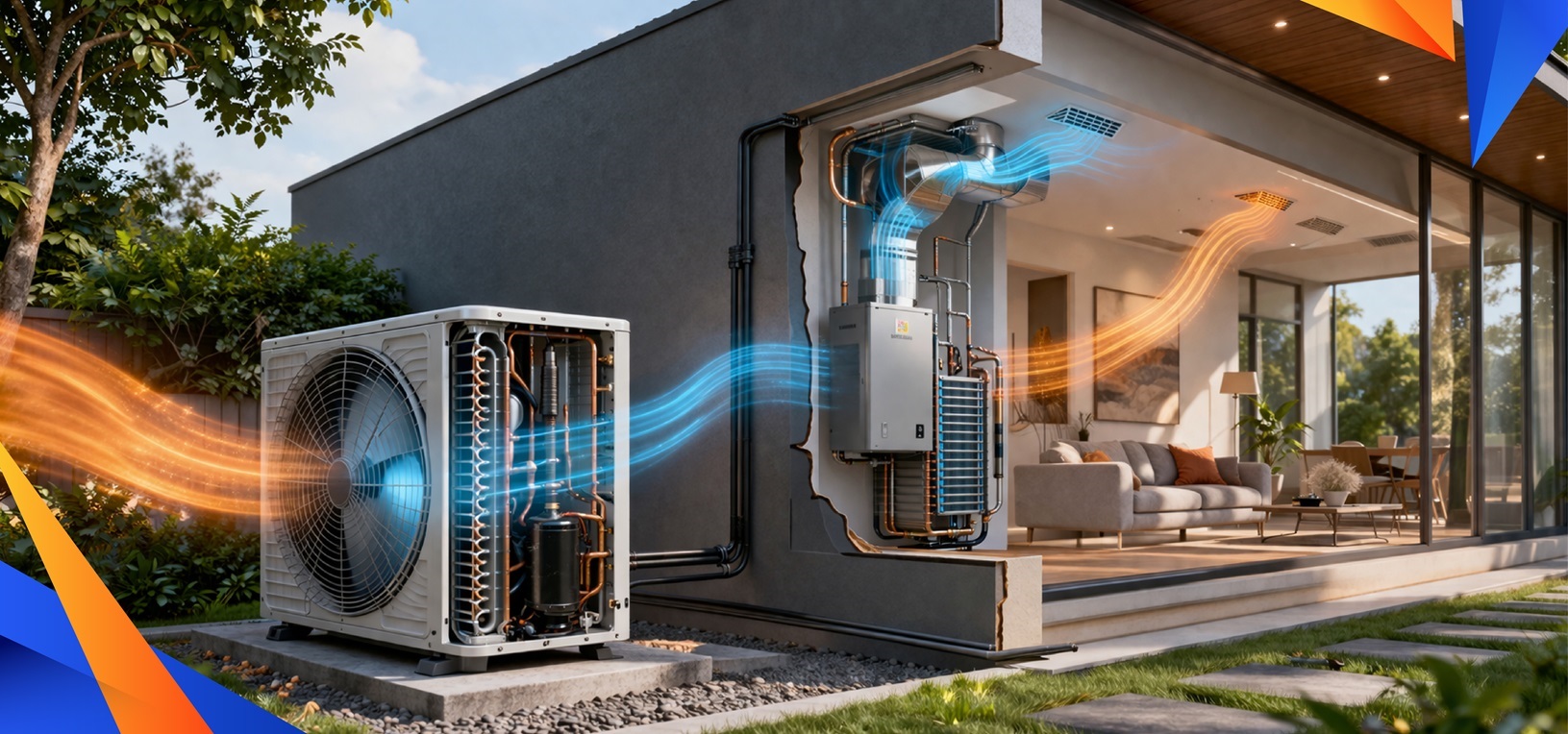
Curious about why residential heat pump systems are becoming the go-to choice for Canadian homeowners? Unlike traditional heating, heat pump operation doesn’t generate heat; it simply moves it. Through a smart heat transfer mechanism and vapour compression process, it draws thermal energy from outdoor air and circulates it indoors efficiently. The refrigerant compression cycle and thermal energy exchange handle the work seamlessly, while thermostat temperature regulation keeps your home perfectly comfortable. Understanding how heat pumps work is genuinely your best first step toward a solid heat pump energy-saving guide.
What Is a Heat Pump?
A heat pump is a system based on the heat pump working principle, designed to transfer heat efficiently. The heat pump heating and cooling process uses thermal energy transfer through a vapor compression cycle, where the refrigerant cycle in heat pumps absorbs and releases heat. In basic heat pump operation, the compressor pressure mechanism increases temperature, while the refrigerant evaporation process and the condenser heat release complete the cycle. This explains how heat pumps transfer heat and defines the overall heat pump system function.
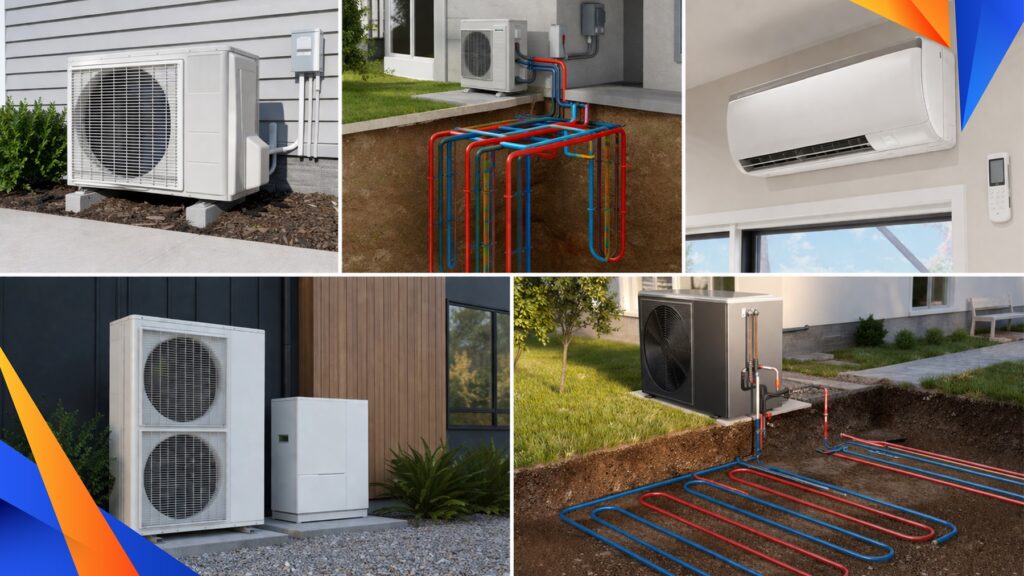
Types of Heat Pumps for Homes
Choosing the right residential heat pump type makes all the difference in home comfort. The table below outlines the most common options available.
| Type of Heat Pump | Description | Best For |
| Air source heat pump systems | A widely used solution that transfers heat from the outdoor air to provide reliable, year-round indoor comfort with strong energy efficiency | Most residential homes |
| Ground source heat pumps | Utilize ground loop systems and geothermal heat exchange to deliver consistent performance and superior energy efficiency in all seasons | Long-term efficiency |
| Ductless heat pump systems | Provide flexible, room-by-room temperature control without the need for ductwork, making them ideal for retrofits and older homes | Homes without ducts |
| Hybrid heat pump solutions | Combine electric and gas systems to automatically optimize performance and reduce overall energy costs throughout the year | Energy savings |
| Geothermal heat pump technology | Leverages stable underground temperatures to deliver highly efficient heating and cooling with minimal energy consumption | Large homes & cold climates |
| Refrigerant compression cycle systems | From the core of modern heat pump operation, ensuring dependable heat transfer and consistent indoor comfort | Everyday heating & cooling |
How Does a Heat Pump Work and Why Is It Energy-Efficient?
A heat pump works by transferring heat rather than generating it. Using the vapour compression cycle and refrigerant phase change, it delivers an impressive coefficient of performance (COP), meaning it produces more energy than it consumes. This makes it a highly cost-effective heating system with low energy consumption.
- Lower operating costs: High COP heat pumps and smart compressor efficiency consume significantly less energy, reducing your monthly bills noticeably.
- Reduced carbon footprint: Eco-friendly home heating made high COP heat pumps use minimal electricity while maximizing warmth year-round.
- Year-round comfort: Heating in winter, cooling in summer, the vapour compression cycle keeps your home consistently comfortable every single season.
Tips to Maximize Savings with Heat Pumps
Want to genuinely save energy with your heat pump? These simple habits make cost-saving heat pump operation easy:
- Smart thermostat temperature regulation: Avoid constantly adjusting temperatures
- Clean filters regularly: Clogged filters can reduce airflow and lower heat exchanger efficiency.
- Ductwork airflow control: Seal leaks to keep air flowing properly
- Manage compressor load: Avoiding excessive operation during peak hours.
- Seasonal energy optimization: Adjust settings with changing seasons
- Schedule regular maintenance: Maintains consistent energy savings and optimal heat pump performance.
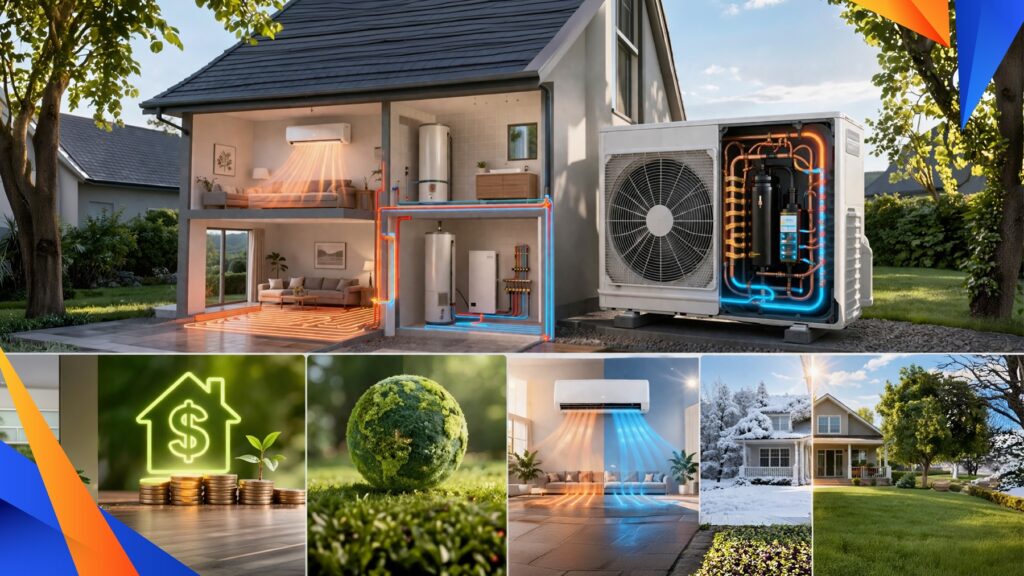
Why Heat Pumps Help Reduce Energy Bills: Ready to Lower Your Energy Bills?
Lowering bills starts with heat pump energy savings driven by thermal energy transfer efficiency, not heat generation. This supports lower electricity costs with heat pumps and real energy consumption reduction. As efficient home heating systems, they use a coefficient of performance mechanism, compressor efficiency mechanism, and heat recovery process, delivering strong heat pump electricity consumption benefits and reliable energy-saving HVAC solutions.
FAQs
Which type of heat pump is best?
Air source heat pump systems suit most homes, but for maximum thermal energy transfer and geothermal heat exchange, a ground source heat pump wins on coefficient of performance and long-term efficiency.
What are the best heat pumps for a house?
The best choice depends on your home’s size and budget. Air source heat pumps offer affordability, while geothermal heat pump systems deliver superior coefficient of performance and vapour compression cycle efficiency in the long term.
Do heat pumps always run?
Not always heat pump cycling behaviour depend on your thermostat temperature regulation settings. During extreme temperatures, the compressor cycling process runs longer to maintain consistent thermal energy exchange and indoor comfort efficiently.
Do heat pumps use a lot of electricity?
No thanks to an impressive coefficient of performance, energy-efficient heat pump systems deliver more heat than they consume, keeping residential heat pump power usage and overall compressor efficiency remarkably low year-round.