

The cost of fitting air conditioning in Canada typically ranges from about $3,500 to $9,000 for a standard central system, while the final price depends on system type, property size, efficiency, existing ductwork, electrical requirements and installation complexity. Current Canadian cost guides place many standard central AC installations around the $4,000–$7,000 range, but larger or more complex projects can cost more.
Equipment-only pricing rarely reflects the full picture — labour, ductwork changes, permits and electrical upgrades add to the installed cost. Residential installs are usually simpler than commercial projects, which often need larger units and more complex ventilation. Ductless systems typically cost less upfront than central AC but suit different layouts.
In Calgary, pricing can differ from Toronto or Vancouver due to local labour rates, climate-driven sizing and permitting. Two similar properties can still receive very different quotes once ductwork and electrical capacity are factored in. Our Air Conditioning Installation Services team can help clarify what your project needs.
What Factors Affect the Cost of Installing Air Conditioning?
AC System Type and Configuration
A central AC system suits homes with existing ductwork, distributing cooled air through a shared duct network connected to the furnace. A ductless mini-split, by contrast, uses one or more indoor evaporator units linked to a single outdoor unit, making it a practical option for additions, older homes, or properties without ducts. Multi-zone configurations allow different areas to be cooled independently, but each indoor head adds to material and labour costs. Split-system units generally cost less to install than multi-zone mini-splits with several indoor coils.
Property Size and Cooling Capacity
Cooling capacity is measured in tonnage or BTUs, and correctly sizing a system depends on a proper cooling load calculation rather than square footage alone. A ton of cooling capacity equals roughly 3.5 kW or 12,000 Btu/h, and the cooling load itself is calculated by summing heat gain from all sources in the home to determine the required capacity. Oversizing wastes money and shortens cycles without properly removing humidity, while undersizing leaves a home struggling on the hottest days — both affect installed cost.
Ductwork and Electrical Requirements
The overall cost of installing central air conditioning depends heavily on the condition of the existing furnace and ductwork, and whether the electrical service needs upgrading to handle the added load. Homes with undersized breaker panels may need an electrical upgrade before installation, while poor duct sizing or leaky ductwork can require modification to handle the airflow a new system demands.
Canada-specific note: Room and central air conditioners fall under Canada’s Energy Efficiency Regulations, requiring minimum SEER performance. EnerGuide, managed by NRCan and HRAI, helps compare efficiency our Air Conditioning Maintenance Services team can help you keep that efficiency long-term.
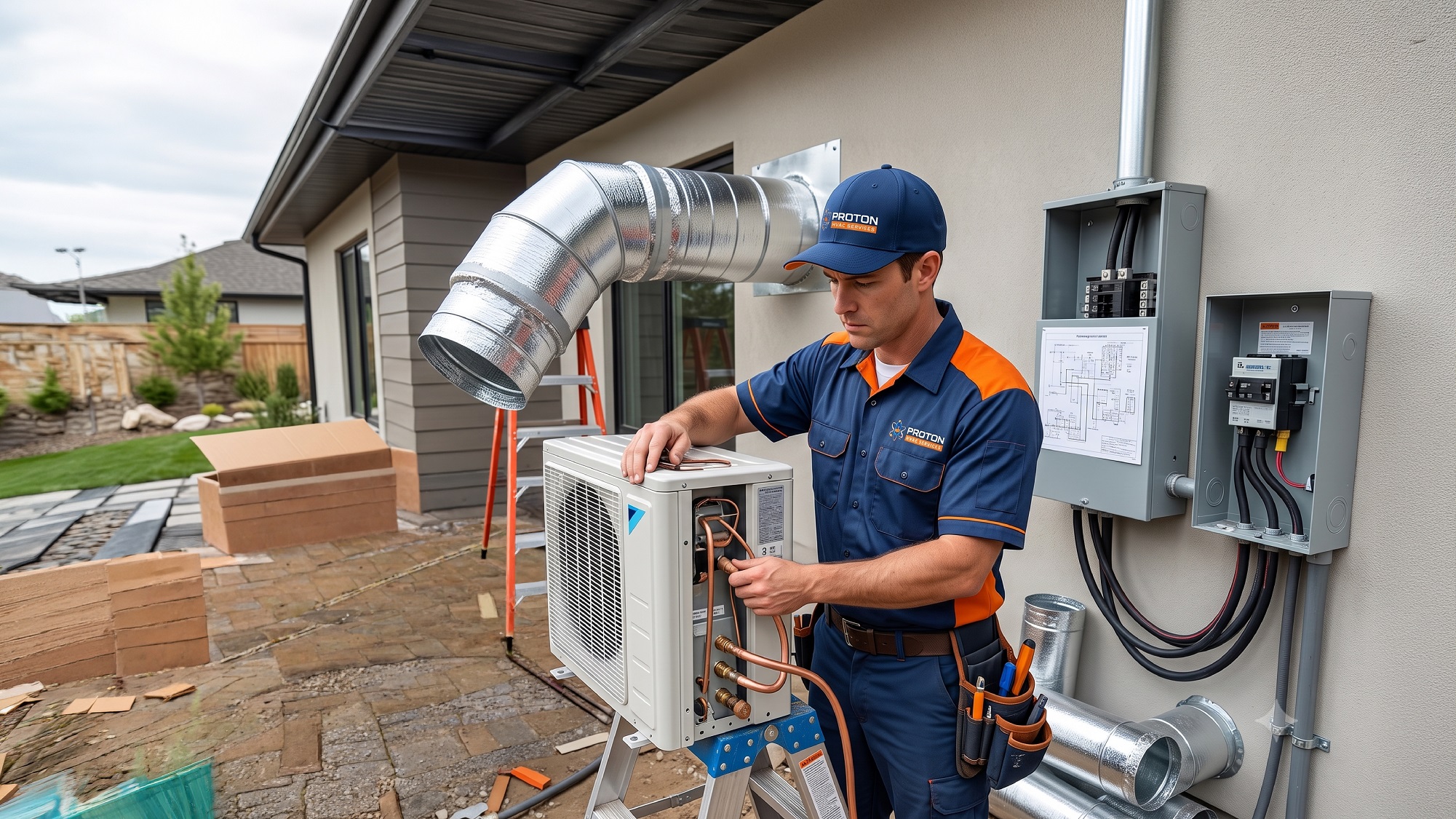
Central AC vs. Ductless Air Conditioning: Which Costs More?
The cost of an air conditioning unit varies significantly depending on whether you choose a ducted or ductless system, and the cheapest equipment price doesn’t always translate into the lowest total project cost. Central AC typically has a lower entry price where ductwork already exists, but ductless mini-splits can work out cheaper overall for homes needing multiple zones without ducts, since they avoid costly duct installation or modification.
| Factor | Central AC | Ductless Mini-Split |
| Existing ductwork | Usually required | Not required |
| Best suited for | Whole-property cooling | Zoned cooling |
| Installation complexity | Moderate | Low–moderate |
| Ductwork cost | Possible | Usually avoided |
| Multiple zones | Through duct system | Multiple indoor heads |
| Typical Canadian cost | $3,500–$7,000+ | $4,500–$8,500+ |
When Central Air Conditioning Makes Sense
Central AC is the practical choice for properties with an existing forced-air furnace and ductwork, since the system can distribute cooled air through the same network used for heating. It suits whole-property cooling in single-family homes and small commercial spaces where consistent temperature control across many rooms matters more than zone-by-zone flexibility. Where ductwork is already in good condition, installation is comparatively straightforward, keeping labour costs down.
When Ductless Air Conditioning Makes Sense
Ductless systems suit properties without existing ductwork, additions, older buildings, or homes where installing ducts would be disruptive or expensive. A single-zone mini-split cools one room or area efficiently, while multi-zone configurations connect several indoor units to one outdoor condenser for room-by-room control. This flexibility makes ductless AC a strong option for retrofits and small commercial units, though adding multiple indoor heads increases both equipment and installation cost.
How Does Air Conditioning Installation Cost Vary Across Canada?
The costs of air conditioning installation aren’t uniform across the country — regional labour rates, climate demands, property construction and contractor availability all shape the final quote. A fixed national price doesn’t reflect reality, since a home in a humid Ontario summer has different cooling requirements from one on the dry Alberta prairies or the mild BC coast.
Calgary and Alberta
Alberta’s prairie climate brings intense but shorter summer heat, which affects cooling load calculations and system sizing for Calgary AC installation. Contractor availability and labour rates in Alberta can differ from other provinces, and many homes here also pair central AC installation with heat pump services, since heat pumps handle both summer cooling and shoulder-season heating efficiently in this climate.
Toronto and Ontario
Ontario’s humid summers place a heavier demand on humidity control alongside temperature reduction, which can influence system selection and sizing for Toronto AC installation. Greater Toronto Area (GTA) cooling demand tends to be high through summer, and dense urban housing stock can add installation complexity where ductwork retrofits are needed.
Vancouver and British Columbia
British Columbia’s milder climate generally means lower cooling loads than Alberta or Ontario, and many Vancouver properties — particularly older homes without ductwork — favour ductless systems for targeted, room-by-room comfort. Lower overall heat gain can make smaller-capacity systems practical, though coastal humidity still plays a role in comfort.
Real-life example: A Calgary property with existing furnace ductwork may require a different installation approach from a Toronto property undergoing a first-time central AC installation, since duct condition, electrical capacity and local climate all shape the scope of work.
What Should Be Included in an Air Conditioning Installation Quote?
A thorough cost of air conditioning installation quote should spell out exactly what’s covered, so you can compare contractors fairly and avoid surprise charges later. A complete quote typically includes:
- ✅ Equipment and compatible components (condenser, evaporator coil, indoor unit)
- ✅ Installation labour
- ✅ Refrigerant line work
- ✅ Electrical connections
- ✅ Condensate drainage setup
- ✅ Commissioning and system testing
- ✅ Disposal of old equipment, where applicable
- ✅ Permit and inspection fees, where applicable
- ✅ Warranty details (equipment and labour)
- ✅ Clearly listed exclusions and potential additional charges
Equipment and Labour
The equipment price covers the outdoor condenser, indoor evaporator coil and compressor, but installation labour is a separate and significant portion of the total cost. Central air conditioners in Canada must meet minimum efficiency standards set out in federal energy efficiency regulations, and HVAC technician time depends on system type, property layout and how straightforward the connection to existing ductwork or electrical is. A reputable contractor should itemize equipment and labour separately, so you can see what you’re paying for rather than a single bundled figure.
Additional Installation Costs
Beyond the base installation, extra costs can include electrical panel upgrades, ductwork modifications, longer refrigerant piping runs, and permit fees. In Calgary, an electrical permit is required for AC installation, and mechanical permits may apply if ductwork changes too. Requirements vary by municipality, so confirm with your local permit authority or contractor. A good quote lists these separately rather than bundling them, so you know what could raise the price.
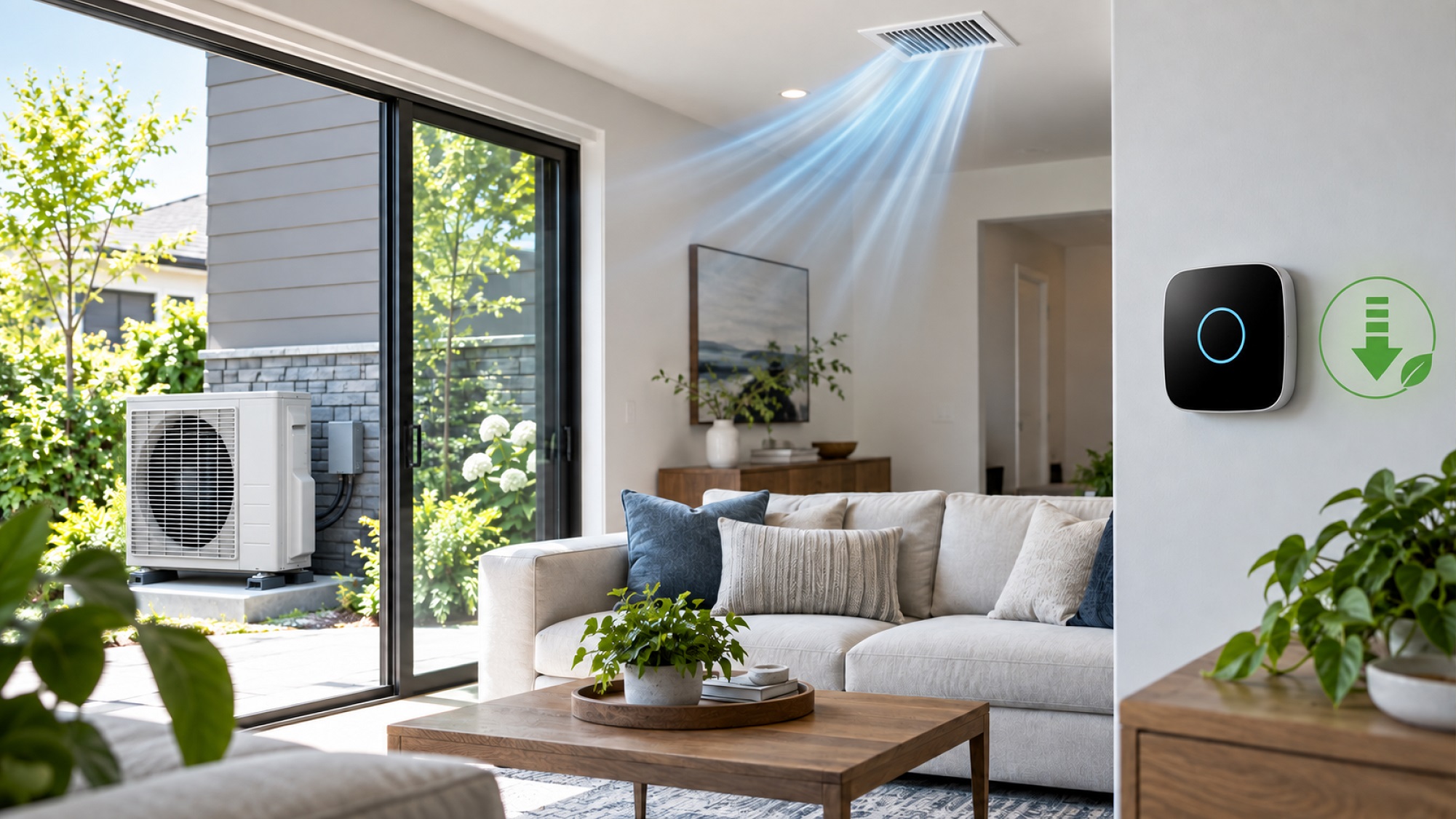
Can a More Efficient Air Conditioner Lower Operating Costs?
The cost of a new air conditioning unit is only part of the picture — its efficiency rating directly affects how much electricity it consumes to keep your home cool, which shapes long-term operating costs. According to Natural Resources Canada, operating cost depends on factors including location, weather, efficiency rating, system size, thermostat settings, occupancy and local electricity prices. A higher-efficiency unit generally costs more upfront but can use less electricity over its lifespan, though savings depend heavily on your specific property and usage habits.
What Is SEER2?
SEER2 is the updated seasonal efficiency rating used to measure how much cooling a system delivers per unit of electricity consumed over an entire cooling season — the higher the number, the more efficient the unit. The SEER (seasonal energy efficiency ratio) is determined by dividing the total cooling provided over the cooling season by the total energy the air conditioner uses during that time, based on a climate with an average summer temperature of 28°C. In Canada, central air conditioners must meet a minimum SEER rating under federal energy efficiency regulations, and the EnerGuide rating system — jointly managed by NRCan and HRAI helps homeowners compare the efficiency of different models before buying.
Why Correct AC Sizing Matters
Efficiency ratings only tell part of the story. If a system isn’t matched to the home’s actual cooling needs, even a high SEER2 unit won’t perform as expected. An undersized system struggles to keep up on the hottest days, running constantly without reaching a comfortable temperature, while an oversized one cycles on and off too quickly to properly control humidity, leaving the air feeling clammy despite a lower thermostat reading. Getting the size right — based on a proper load assessment rather than a rule of thumb — is what allows a high-efficiency unit to actually deliver on its rating.
What Are the Main Costs After Air Conditioning Installation?
The cost of air conditioning doesn’t end once the system is installed — ownership brings ongoing costs that are worth planning for from the start, rather than focusing on the purchase price alone.
| Cost Category | What It Covers |
| Installation | Equipment, labour and standard installation materials |
| Maintenance | Inspection, cleaning and performance checks |
| Operating | Electricity required for cooling |
| Repairs | Components and labour when faults occur |
| Replacement | Future equipment and installation costs |
Regular preventive maintenance — filter cleaning, coil checks and seasonal servicing — helps a system run efficiently and can extend its lifespan, whereas neglected upkeep tends to raise both operating and repair costs over time. Our Air Conditioning Maintenance Services cover the seasonal checks that keep a system performing as intended.
Operating costs depend on how efficiently the unit runs and how often it’s used, while repair costs vary depending on which component fails and how accessible it is. Our Air Conditioning Repair Services team can diagnose and fix issues quickly when they come up. Even a well-maintained system will eventually need replacing, typically after 15 years or more, so it’s worth viewing air conditioning as a lifecycle cost rather than a one-time purchase — the installation price is only the starting point, and consistent professional maintenance is usually the most effective way to keep the remaining costs in check.
FAQ
Q1. Does an older home cost more to fit with air conditioning?
Often, yes. Older homes may lack existing ductwork, have outdated electrical panels, or need building envelope upgrades. These factors increase installation complexity and cooling load requirements compared to newer construction.
Q2. Is central air conditioning cheaper than ductless AC?
It depends on the property. Central AC costs less where ductwork already exists; ductless mini-splits often work out cheaper for homes needing zoning without ducts.
Q3. Are there extra costs when installing AC in an older home?
Yes. Electrical panel upgrades, ductwork installation or modification, and insulation or ventilation improvements are common in older homes to meet code compliance and proper load calculations.
Q4. What factors affect AC installation costs in an older Canadian home?
Electrical panel capacity, existing ductwork condition, insulation levels and building envelope performance all affect cost. Code compliance requirements can also add scope not present in newer homes.
Q5. When is the best time to replace or install an air conditioner in Canada?
Off-season, typically fall or spring, is ideal. Contractors have more availability, and scheduling before the cooling season avoids delays and ensures the system is ready when needed.
CONCLUSION
Air conditioning installation cost varies considerably depending on property size, existing ductwork, electrical capacity and system type — there’s no single fixed price that applies everywhere. Rather than comparing equipment prices alone, it’s more useful to weigh the total installed cost alongside efficiency and long-term operating requirements, since the cheapest unit upfront isn’t always the most economical choice over its lifespan. Professional sizing and installation remain essential for reliable comfort and consistent performance, whatever system you choose.
Get a free quote, book a consultation, or speak with our HVAC experts today about the right air conditioning solution for your residential or commercial property.