
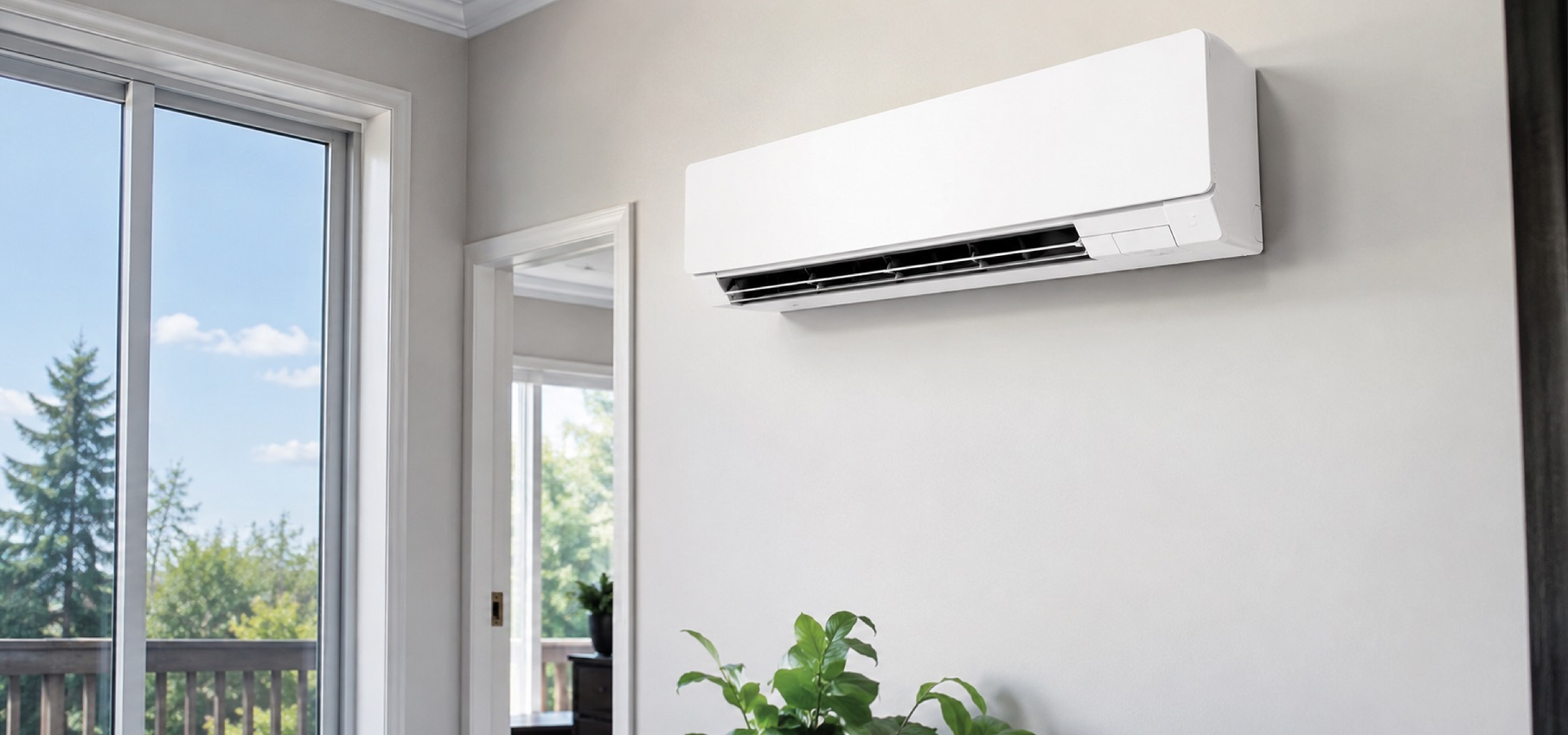
A ductless air conditioning system, also called a ductless AC or mini-split system, cools your space without traditional ductwork. It consists of an outdoor condenser connected to one or more indoor air-handling units through refrigerant lines. Because conditioned air is delivered directly into each room, ductless systems offer excellent energy efficiency, zoned comfort, and flexible installation.
They’re an ideal solution for Canadian properties without existing ducts, property additions, finished basements, condos, and rooms that need individual temperature control. Compared with central air conditioning, ductless AC systems can reduce energy waste while improving indoor comfort. Our Ductless Mini-Split Installation services help property owners across these situations get a system sized and installed correctly from the start. In this guide, you’ll discover how ductless air conditioners work, their benefits, installation costs in Canada, and whether they’re the right cooling solution for your property.
Main Components of a Ductless AC System
A ductless AC system includes an indoor unit and outdoor unit connected by refrigerant piping and a condensate drain. Core components like the compressor, expansion valve, and heat exchanger manage refrigerant flow for efficient cooling. Our Air Conditioner Installation experts ensure every component is properly sized and connected.
Where Ductless Systems Are Commonly Installed
Ductless systems are commonly installed for basement cooling, building addition AC, condo cooling, and garage air conditioning, thanks to flexible zoned cooling that doesn’t require conditioned space ductwork. This targeted airflow distribution supports precise thermal zoning throughout your space. Air Conditioner Repair Services keep these systems running efficiently year-round.

What Are the Benefits of Ductless Air Con?
Ductless AC systems deliver energy-efficient cooling through a variable-speed compressor, adjusting output precisely instead of cycling on and off like traditional units. This approach supports energy optimisation, indoor climate control, and consistent indoor comfort throughout the year.
Key Benefits of Ductless AC:
- Energy Efficiency – Variable-speed compressors reduce energy waste while delivering efficient cooling
- Quiet Operation – A quiet air conditioner design minimises noise compared to traditional systems
- Flexible Installation – No ductwork required, making flexible installation possible in basements, additions, and condos
- Improved Comfort – Better humidity regulation and airflow management for consistent indoor comfort
Real-Life Property Owner Example
A Calgary property owner renovating a bungalow installed a multi-zone ductless system, cutting cooling costs significantly while improving comfort across both the basement and upper floor.
How Do Ductless Air Conditioners Work?
A ductless mini-split system transfers heat between indoors and outdoors using refrigerant, rather than moving cooled air through ducts. It relies on two main components: an indoor air handler and an outdoor condenser unit, connected by refrigerant lines.
Step-by-Step: How a Ductless AC System Works
- Thermostat Signals Cooling Demand – The thermostat detects room temperature and triggers the system.
- Refrigerant Absorbs Indoor Heat – Inside the indoor unit, refrigerant flows through the evaporator coil, absorbing heat and humidity as a fan circulates air.
- Inverter Compressor Pressurises Refrigerant – The outdoor inverter compressor pressurises the refrigerant, adjusting speed continuously for efficient, precise cooling.
- Heat Releases Outdoors – Pressurised refrigerant passes through the condenser coil, releasing heat into outdoor air.
- Expansion Valve Cools Refrigerant – The expansion valve lowers pressure and temperature, preparing refrigerant to absorb heat again.
- Cycle Repeats – Cooled refrigerant returns indoors, and the cycle continues until the thermostat’s target is reached.
Heating Mode
Many ductless systems function as heat pumps, reversing refrigerant flow to extract outdoor heat and warm the space — even in cold conditions — making them a year-round HVAC solution.
Why This Enables Zoned Cooling
Since each indoor air handler operates independently, ductless systems allow zoned cooling with different temperatures per room. Paired with inverter technology, this delivers energy-efficient cooling by matching output precisely to each zone’s needs.
Ductless AC vs Central Air Conditioning
Choosing between a ductless air conditioning system and central air conditioning largely comes down to your property’s existing ductwork, cooling needs, and efficiency priorities. While central AC relies on a single system pushing conditioned air through ducts to every room, ductless systems use zoned cooling, with each indoor unit operating independently for more targeted air distribution and thermal performance.
Comparison: Ductless AC vs Central Air Conditioning
| Factor | Ductless AC | Central Air Conditioning |
| Ductwork Required | No ductwork needed | Requires existing or newly installed ductwork |
| Installation | Faster, less invasive installation | More involved installation, especially without existing ducts |
| Cooling Method | Zoned cooling, room-by-room control | Whole-property cooling through a single thermostat zone |
| Energy Efficiency | Higher efficiency, no duct energy loss | Some efficiency lost through ductwork leaks |
| Best For | Additions, basements, condos, ductless property | Residential and commercial spaces with existing ducted HVAC systems |
| Air Distribution | Targeted airflow per room | Uniform air distribution throughout the space |
Ductless Cooling Trends Across Canada:
Ductless mini-split air conditioning systems are increasingly chosen by residential and commercial property owners because they provide efficient cooling without requiring existing ductwork, making them well suited for renovations, additions, Natural Resources Canada (NRCan) recommends selecting ENERGY STAR® certified cooling equipment to improve energy efficiency and reduce electricity consumption, while ENERGY STAR-certified ductless systems can help lower long-term operating costs.
Are Ductless Air Conditioners Good for Canada
Understanding what is ductless air conditioning helps explain why it suits Canada’s varied climate zones so well. From Toronto’s humid summers to Calgary weather’s dry heat and Vancouver cooling needs shaped by coastal dampness, ductless systems adapt to different seasonal temperature demands without relying on ductwork tied to a single insulation performance standard.
Checklist: Is Ductless AC Right for Your Canadian Property?
- Your property lacks existing ductwork or has poor insulation performance
- You live in a region with high cooling demand, like Ontario or Alberta
- You want zone-specific comfort rather than whole-space cooling
- Your property is in a coastal climate zone, like BC, with humidity concerns
- You’re prioritising energy efficiency standards for long-term savings
- You want a system that also functions as a heat pump for winter
Because ductless systems perform reliably across these varied climate zones, they remain a strong option for most Canadian property owners, though routine HVAC Maintenance Services are still essential to maintain consistent building efficiency and performance year-round.
Where Are Ductless Air Conditioners Best Used?
Understanding what is ductless air conditioning also means recognising where it performs best. Ductless systems suit a wide range of spaces, including offices, retail stores, clinics, hotels, restaurants, educational facilities, server rooms, renovation projects, and any building without existing ductwork. Their flexible, zone-by-zone design makes them especially useful where different rooms require independent temperature control, or where installing traditional ductwork isn’t practical due to structural or budget constraints.

Ductless Air Conditioners: Best Applications
Ductless systems shine in spaces where traditional ducting falls short. They’re ideal for office cooling and commercial cooling in retrofitted spaces, plus renovation HVAC projects where running ductwork isn’t practical. Perfect for room cooling in additions, garages, or basements needing independent HVAC zoning. With strong thermal insulation pairing, they deliver excellent cooling performance while boosting overall building efficiency. Pair one with a Heat Pump Installation for year-round comfort.
HVAC Expert Tip:
Install the indoor unit high on an interior wall, away from direct sunlight, kitchens, or heat-generating appliances. Proper placement improves airflow, maintains consistent cooling, enhances energy efficiency, and helps your ductless air conditioning system deliver optimal year-round performance.
FAQ
Q. Are ductless AC systems more energy efficient than central air conditioning?
Yes. Ductless systems eliminate duct-related energy losses and provide zoned cooling, allowing you to cool only occupied rooms. This can reduce electricity consumption and improve energy efficiency in Canadian properties.
Q. Is ductless air conditioning suitable for older properties?
Yes. Ductless air conditioners are an excellent option for older Canadian properties that lack ductwork. They require minimal structural modifications while providing efficient, room-by-room cooling and improved indoor comfort.
Q. Which is better, ductless AC or central AC?
Central AC is best for cooling an entire property with existing ductwork, while ductless AC is ideal for properties without ducts, room additions, or zoned cooling. The better option depends on your property’s layout and cooling needs.
Q. Which type of AC is best for a property?
A central air conditioner is ideal for cooling an entire property, while a ductless mini-split works well for individual rooms or properties without ductwork. Choose the system that best suits your property’s size, layout, and budget.
Key Takeaways
Understanding what is ductless air conditioning is the first step to choosing an efficient, ductwork-free cooling solution for your Canadian property.
- Ductless air conditioners cool without ductwork.
- Zoned cooling improves comfort and reduces energy waste.
- Variable-speed inverter technology enhances efficiency.
- Many systems also provide heating.
- Professional installation ensures optimal performance and longevity.
CONCLUSION
Ductless air conditioning offers flexible, energy-efficient cooling without the need for ductwork, making it an excellent choice for many Canadian residential and commercial properties. Whether you’re upgrading an older property or adding comfort to a new space, the right system can improve year-round indoor comfort.
Get a free quote, book a consultation, and speak with our HVAC experts today to find the ideal ductless AC solution for your property.