
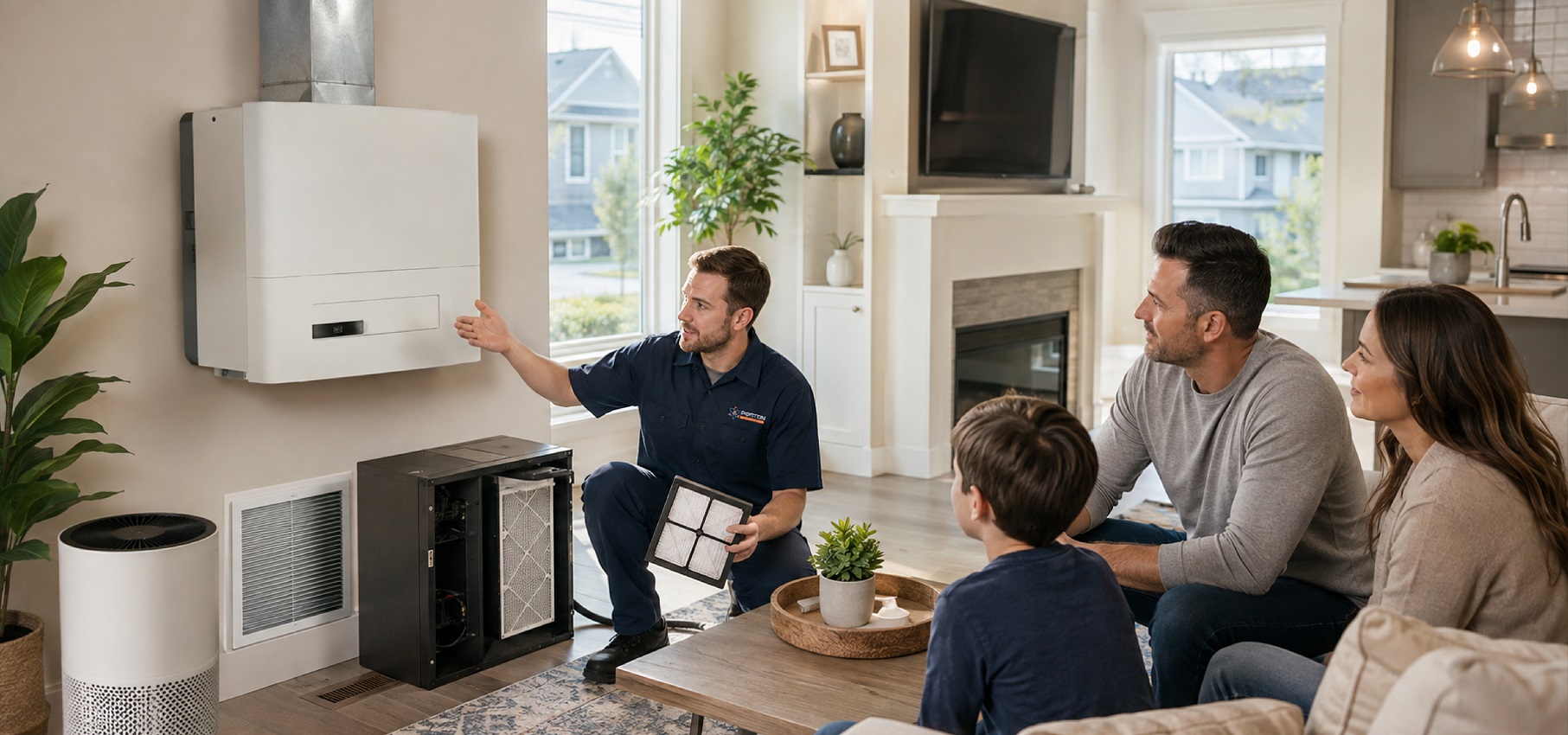
Indoor Air Quality (IAQ) refers to the cleanliness and overall condition of the air inside residential and commercial properties. It is affected by pollutants such as dust, allergens, mould spores, volatile organic compounds (VOCs), pet dander, humidity, and ventilation. Good IAQ helps create a healthier, more comfortable indoor environment while reducing the risk of respiratory issues and improving HVAC system performance.
For Canadian property owners, maintaining healthy indoor air quality is especially important because residential and commercial properties remain sealed for long periods during winter, limiting fresh air circulation. Regular indoor air quality testing can identify hidden contaminants and help determine the best HVAC solutions to improve air quality. Our Indoor Air Quality Services are designed to assess and address these issues directly, from testing to targeted improvements. This guide explains what IAQ is, how to test it, common indoor pollutants, and practical ways to improve your residential and commercial property’s air quality throughout the year.
The Importance of Good Indoor Air Quality
Healthy indoor air directly affects occupant health, breathing comfort, and overall indoor comfort. Indoor air quality (IAQ) depends on your ventilation system, HVAC system, air filtration, relative humidity, airborne particles, volatile organic compounds (VOCs), and carbon dioxide (CO₂) levels. Proper fresh air exchange supports clean indoor air and reduces indoor air pollution, making air quality improvement essential for every Canadian property. Air Purifier Installation further strengthens filtration and home air quality year-round.
What Determines Indoor Air Quality?
Indoor air quality depends on air cleanliness, relative humidity, airflow distribution, particulate concentration, and fresh air exchange. Your ventilation system and pollutant levels together shape overall indoor comfort and breathing quality.
Why Indoor Air Quality Matters
A healthy residential property depends on clean indoor air and respiratory comfort for every occupant. Poor indoor environmental conditions can increase contaminant exposure, affecting occupant health and thermal comfort. Meeting recognized air quality standards helps protect your family’s wellbeing year-round.
How to Check Indoor Air Quality?
To check indoor air quality, watch for dust mites, mould spores, VOCs, and pet allergens caused by indoor moisture, poor ventilation, and seasonal factors. A professional assessment measures particulate matter, biological contaminants, and carbon dioxide levels, revealing hidden moisture intrusion. Regular HVAC Maintenance Services help address these issues before they affect your residential and commercial spaces overall air quality.

Common Indoor Air Pollutants
Common indoor air pollutants include:
- Airborne particles and fine particulate matter – from dust, smoke, and outdoor infiltration
- Household dust and dust mites – accumulating in carpets, bedding, and upholstery
- Mould spores and airborne microorganisms – thriving in areas with excess moisture
- Pollen indoors – entering through open windows, doors, or ventilation gaps
- Cooking fumes and combustion by-products – released from stovetops, fireplaces, and candles
- Volatile organic compounds (VOCs) – off-gassed from paints, cleaning products, and furnishings
- Pet allergens – dander and hair circulating through indoor airflow
Real-Life Property Owner Example
A Toronto homeowner faced worsening winter allergies from sealed windows and constant furnace use. After a professional IAQ assessment, upgraded filtration and improved ventilation significantly reduced symptoms and airborne allergens.
How to Test Indoor Air Quality
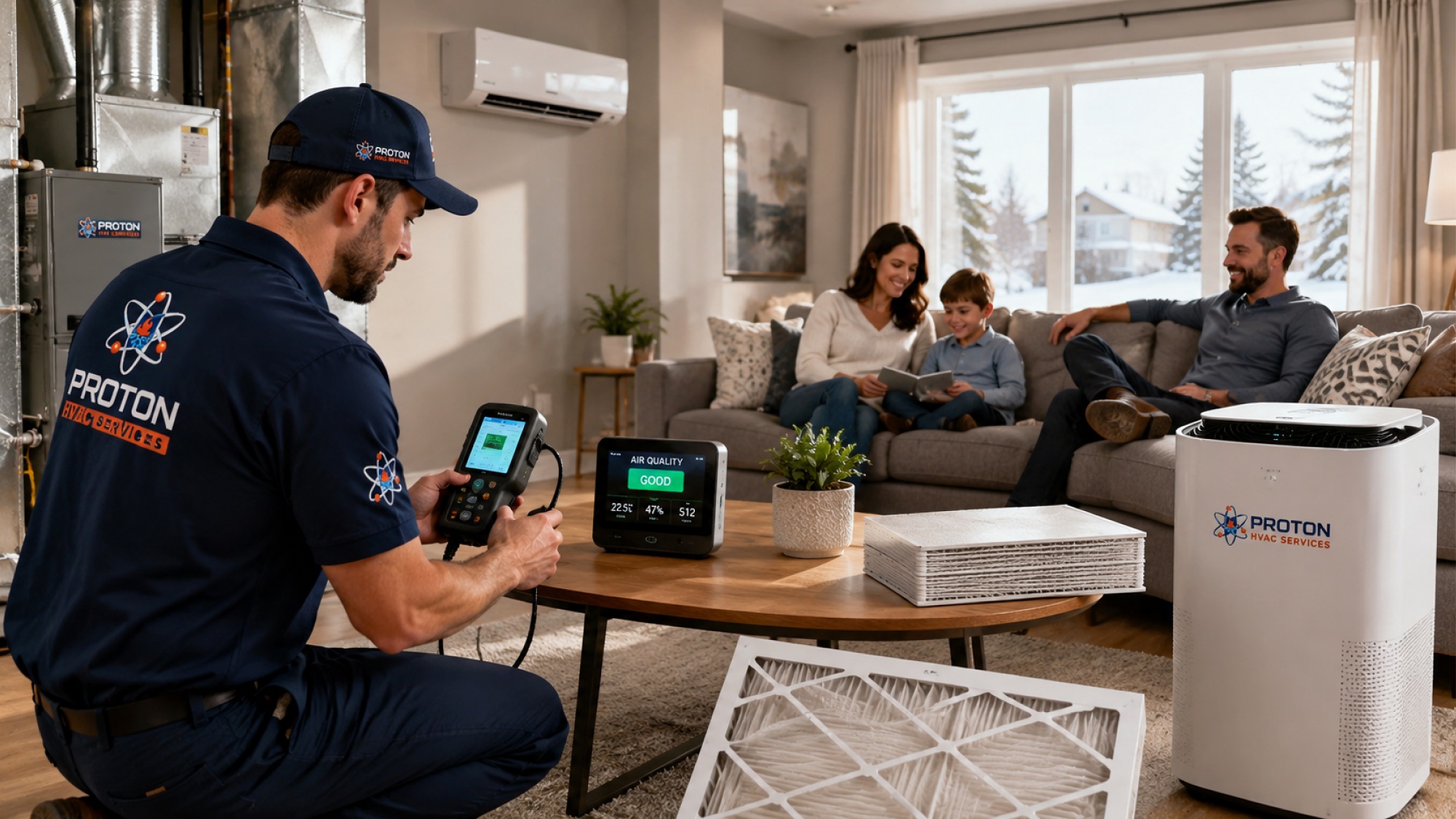
The indoor air quality testing helps property owners move beyond guesswork into measurable results. An indoor air assessment includes pollutant detection, humidity monitoring, ventilation analysis, and airborne particle measurement. While DIY monitors track basic humidity and CO2 levels, a full IAQ evaluation follows guidance like the Canadian Centre for Occupational Health and Safety (CCOHS) for accurate results.
Quick Checklist: When to Schedule an Indoor Air Quality Test
- Persistent musty or stale odours throughout the residential and commercial space.
- Excess dust buildup despite regular cleaning
- Ongoing allergy symptoms that worsen indoors
- Visible mould growth or humidity imbalance
- Reduced airflow or inconsistent ventilation efficiency
- Recent renovations introducing new materials or VOCs
- No IAQ assessment in the past 1–2 years
Signs You Should Schedule an IAQ Test
A musty smell, excess dust, worsening allergy symptoms, or poor ventilation often signal humidity imbalance, mould growth, or airborne irritants reducing ventilation efficiency and indoor comfort.
Professional vs DIY Indoor Air Quality Testing
Professional air testing uses precise air sampling and contaminant analysis for accurate results, while a residential or commercial air monitor offers basic, ongoing tracking. A full IAQ inspection includes ventilation diagnostics and indoor environmental assessment, identifying issues consumer devices typically cannot detect on their own.
Canadian Winter Air Quality Facts:
During Canada’s heating season, an airtight property can trap indoor pollutants if ventilation is inadequate. Health Canada recommends proper ventilation to maintain healthy indoor air, while Natural Resources Canada (NRCan) recommends using HRVs and ERVs to improve air quality and energy efficiency in Canadian homes.
Indoor Air Quality Expert Tip:
Swapping your HVAC filter every 1–3 months is one of the easiest ways to keep indoor air quality in check. When filters get dirty, airflow suffers, energy use climbs, and pollutants end up circulating through your home instead of getting trapped.
How Can You Improve Indoor Air Quality?
Improving indoor air quality starts with the right combination of air filtration, humidity control, and ventilation improvement. Adding an air purifier with HEPA filtration captures fine particles standard furnace filters miss, while mechanical ventilation ensures consistent air exchange throughout residential and commercial properties. Routine HVAC maintenance keeps filtration efficiency high and prevents pollutants from recirculating through your system. Together, these upgrades address how to check indoor air quality concerns at their source rather than just masking symptoms.
Quick Checklist: Ways to Improve Indoor Air Quality
- Install a whole-property air purifier with HEPA filtration
- Upgrade your furnace filter to a higher MERV rating
- Add UV air treatment to target airborne microorganisms
- Balance humidity levels with proper humidity control systems
- Schedule regular HVAC maintenance for consistent performance
- Improve mechanical ventilation for better fresh air exchange
HVAC Solutions That Improve IAQ
A whole-property air purifier, upgraded furnace filter, UV air treatment, and optimised ventilation system work together to improve air filtration, airflow optimisation, and fresh air ventilation throughout residential and commercial properties.
Why Testing Indoor Air Quality Is Important in Canada
Testing indoor air quality matters most in Canadian buildings due to airtight construction and long winter ventilation cycles. Tight building envelopes reduce air exchange rates, trapping indoor humidity and pollutants. Ontario buildings and Alberta climate conditions each demand tailored HVAC recommendations for thermal insulation, seasonal ventilation, and overall indoor comfort throughout the year.
Comparison: IAQ Challenges Across Canada
| Region | Key IAQ Challenge |
| Toronto homes | Humid summers increase indoor moisture and mould risk |
| Calgary air quality | Dry winters strain ventilation performance and comfort |
| Vancouver humidity | Coastal dampness demands consistent moisture control |
| Quebec winters | Cold climate housing traps pollutants indoors longer |
IAQ Challenges Across Canada
Toronto residential properties, Calgary air quality, Vancouver humidity, and Quebec winters each present distinct seasonal air quality issues shaped by cold climate buildings and ventilation performance.
Indoor Air Quality Expert Tip:
Replacing your HVAC filter every 1–3 months is one of the simplest and most effective ways to improve indoor air quality. Dirty filters reduce airflow, increase energy consumption, and allow airborne pollutants to circulate throughout your residential and commercial property.
FAQ
Q. How do I test indoor air quality in my home?
Indoor air quality can be assessed through professional testing or home monitoring devices. HVAC professionals measure airborne particles, humidity, ventilation performance, and contaminants to identify air quality issues and recommend suitable solutions.
Q. What are the most common indoor air pollutants?
Common indoor pollutants include dust, pollen, mould spores, pet dander, volatile organic compounds (VOCs), smoke, and excess humidity. These pollutants can affect comfort, trigger allergies, and reduce indoor air quality.
Q. What are examples of indoor air quality?
Examples of indoor air quality include the levels of dust, pollen, mold, pet dander, smoke, volatile organic compounds (VOCs), carbon dioxide (CO₂), humidity, and ventilation inside a building. Good indoor air quality means these pollutants are kept at safe levels for a healthy and comfortable environment.
Q. How can I improve indoor air quality naturally?
Improve indoor air quality by replacing HVAC filters regularly, controlling indoor humidity, increasing fresh air ventilation, reducing pollutant sources, and scheduling routine HVAC maintenance. Professional air purification systems can further enhance air quality.
Key Takeaways
Knowing what affects your indoor air quality helps you breathe easier and keep your HVAC system running well.
- Indoor air quality affects your health, comfort, and HVAC performance.
- Dust, VOCs, mold, humidity, and poor ventilation are common culprits.
- Professional testing can uncover hidden air quality issues.
- HEPA filtration, HRVs/ERVs, and humidity control improve IAQ.
- Regular HVAC maintenance keeps indoor air cleaner year-round.
CONCLUSION
Healthy indoor air quality is essential for a comfortable, energy-efficient, and healthier residential and commercial property. Regular testing and proper HVAC maintenance help reduce pollutants and improve the air occupants breathe every day.
Get a free quote, book a consultation, and speak with our HVAC experts today to improve indoor air quality in your residential or commercial property.