
If your AC isn’t cooling well, your outdoor unit might be the reason. Cleaning your outside air conditioner unit helps maintain efficiency and extend lifespan. This AC maintenance guide helps you follow the correct HVAC cleaning routine with simple, easy steps read on to learn more.
Over time, dust and debris can build up, causing airflow obstruction and affecting the heat exchange process. This not only reduces cooling efficiency but can also impact indoor air quality. By keeping your unit clean, you can prevent microbial contamination, maintain proper airflow, and ensure your system runs smoothly. It’s a simple practice that every Canadian home can benefit from.
Why Is It Important to Clean Your Air Conditioner Regularly?
Knowing how to clean your air conditioner is key to maintaining comfort and efficiency. The importance of AC cleaning lies in the benefits of cleaning air conditioners, including indoor air quality improvement and better cooling. Dust buildup causes airflow restriction conditions and allergen accumulation processes. Regular care supports microbial growth prevention, helps prevent AC airflow blockage, improves heat transfer efficiency, and delivers long-term regular AC maintenance benefits while you improve AC performance cleaning.

Tools & Safety Tips for Cleaning an Air Conditioner Unit
Follow this step-by-step AC unit cleaning guide to protect your AC components while cleaning and keep your airflow circulation system running smoothly.
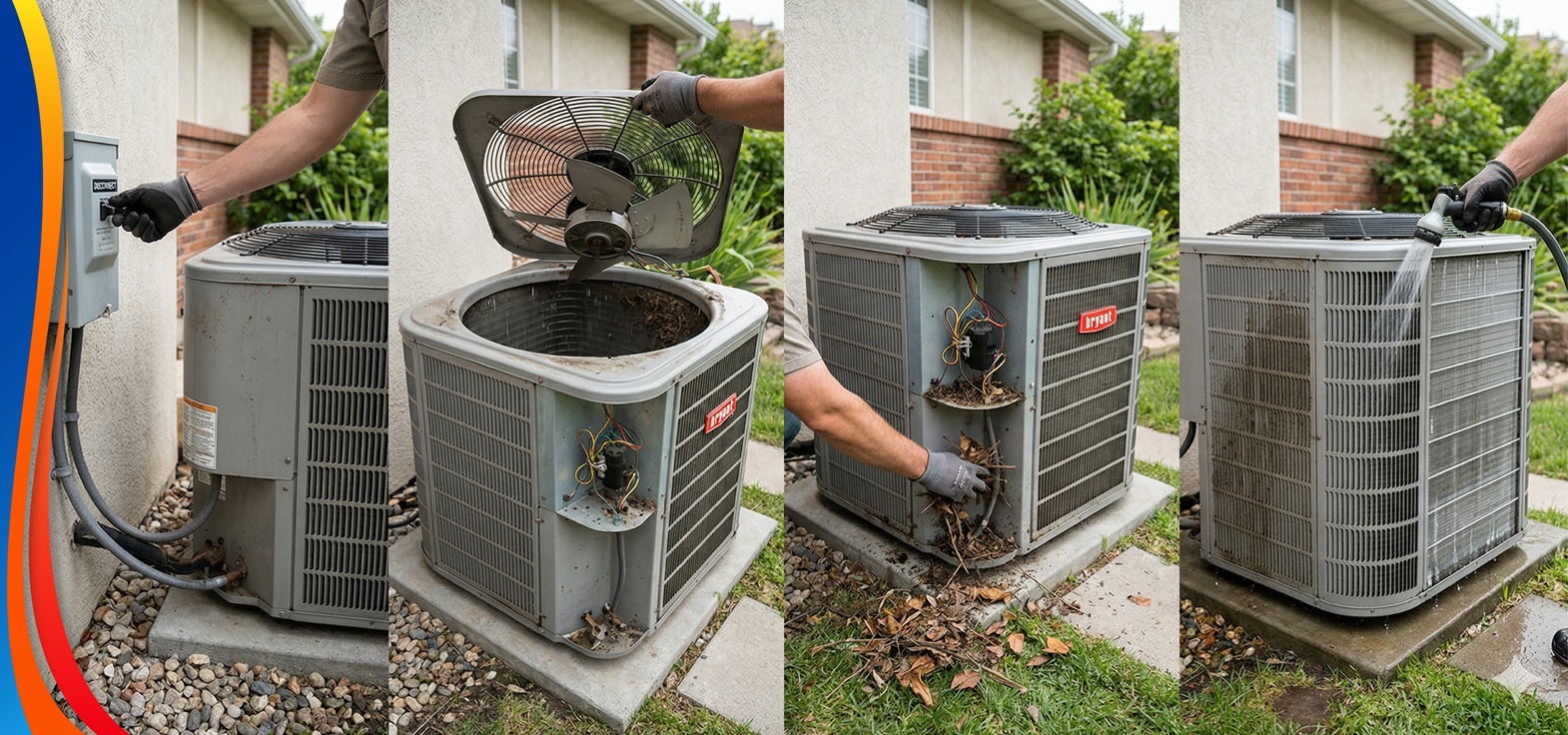
1.Turn off the AC unit
Always switch off the power completely before starting any safe AC cleaning process.
2. Clear away debris around the unit
Remove leaves, dirt, and obstructions affecting your condenser coil heat exchange efficiency.
3. Remove the top of the condenser unit
Carefully lift the top panel to access internal components without damaging your compressor protection mechanism.
4. Remove debris inside the unit
Gently clear out accumulated debris affecting your refrigerant cooling cycle performance.
5. Brush away remaining dust and dirt
Use a soft brush for gentle AC maintenance, protecting delicate fins and coils carefully.
6. Spray coils with an AC coil cleaner
Apply a specialised cleaner to restore the condenser coil heat exchange and thermal regulation process efficiently.
7. Spray unit with a hose
Rinse gently from inside out is a key step in any DIY air conditioner cleaning guide.
8. Replace the AC unit top
Reassemble carefully to restore the proper airflow circulation system and full compressor protection mechanism.
Warning: Do not use a power washer on your AC unit
High pressure damages delicate coils and fins. Always use a regular garden hose for cleaning condenser coils safely.
Common Mistakes When Cleaning an Air Conditioner Unit
Even when you know how to clean your AC, mistakes happen. Here are the most damaging ones to avoid:
- Using a power washer: Causes serious component damage risk and bends delicate coils instantly
- Skipping the power off: A dangerous electrical malfunction condition waiting to happen
- Spraying refrigerant lines: Risks a costly refrigerant leakage issue
- Blocking vents after cleaning: Creates an airflow restriction mechanism that causes system efficiency degradation
- Using harsh chemicals: Damages fins and compromises safe HVAC cleaning practices completely
When Should You Call a Professional for AC Cleaning?
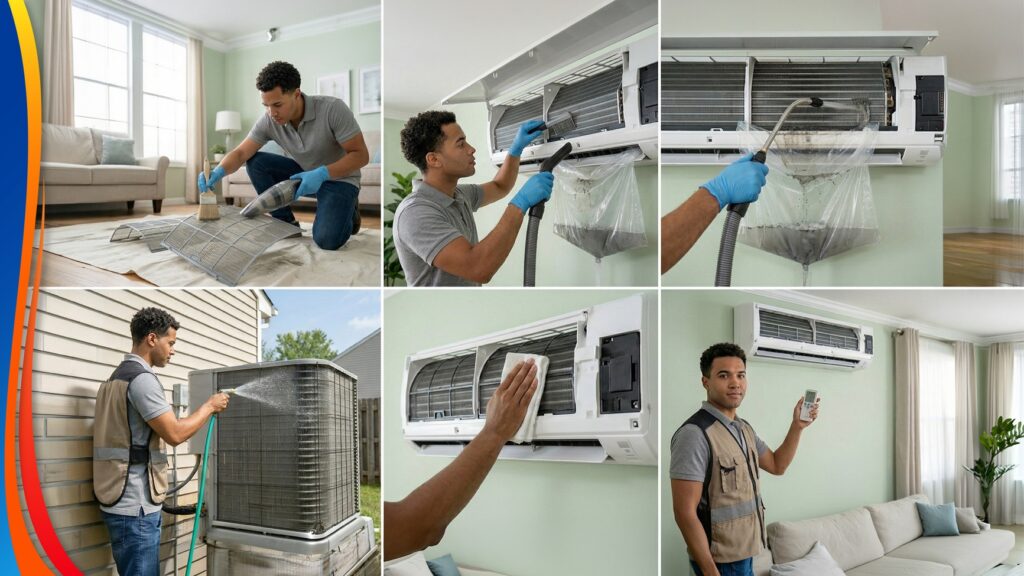
If basic cleaning doesn’t help, it’s time for HVAC professional service. Watch for signs to call HVAC technicians, like airflow obstruction problems, weak cooling, or unusual noises. Issues like refrigerant leakage issue, electrical circuit fault, or compressor malfunction mechanism need an AC repair professional help. For proper heating and cooling system troubleshooting, consider when to hire HVAC experts for reliable HVAC maintenance service.
Following simple steps for how to clean the air conditioner outside unit helps you maintain the outdoor AC unit’s performance and extend the AC unit’s life
| Tip | What To Do | Benefit |
| Follow proper cleaning steps | Clean your outside AC unit regularly using the right method | Improves performance and extends AC unit life |
| Clear debris often | Remove leaves, dust, and dirt around the condenser | Prevents debris buildup and blockage |
| Ensure proper HVAC care | Check and maintain the outdoor unit components | Supports better condenser coil efficiency |
| Keep surrounding area clear | Maintain open space around the unit | Enhances airflow and heat exchange |
| Schedule routine maintenance | Plan periodic professional or DIY cleaning | Reduces dirt buildup and prevents corrosion |
FAQs
Is it okay to spray your outside AC unit with water?
Yes, gently spraying water on your AC condenser unit with a regular hose safely removes dust accumulation and restores proper heat transfer and thermal regulation efficiently.
What happens if you don’t clean your AC unit?
Neglecting cleaning causes serious condenser coil blockage, airflow restriction, and heat transfer inefficiency, reducing cooling performance significantly and leading to costly repairs from thermal regulation disruption over time.
How often should your outside AC unit be cleaned?
At least once a year, ideally every spring. Regular AC condenser cleaning prevents dust accumulation, maintains proper airflow, and keeps heat transfer and thermal regulation performing at peak efficiency.