

A heat recovery ventilator (HRV) is a mechanical ventilation system designed to exchange stale indoor air for fresh outdoor air while capturing heat from the outgoing airstream before it leaves your home. This process delivers continuous fresh air, improves indoor air quality, and drastically minimizes heating energy loss. In Canada’s harsh winters—from Calgary to the rest of Alberta—modern homes are built exceptionally airtight to boost energy efficiency. However, tight sealings trap pollutants and moisture inside. According to Health Canada, mechanical ventilation like an HRV is essential for transferring thermal energy while keeping your space healthy. But how does this actually work?
Curious about how this technology keeps your home fresh and efficient during harsh winters? Let’s dive into how an HRV works and whether it’s right for your space
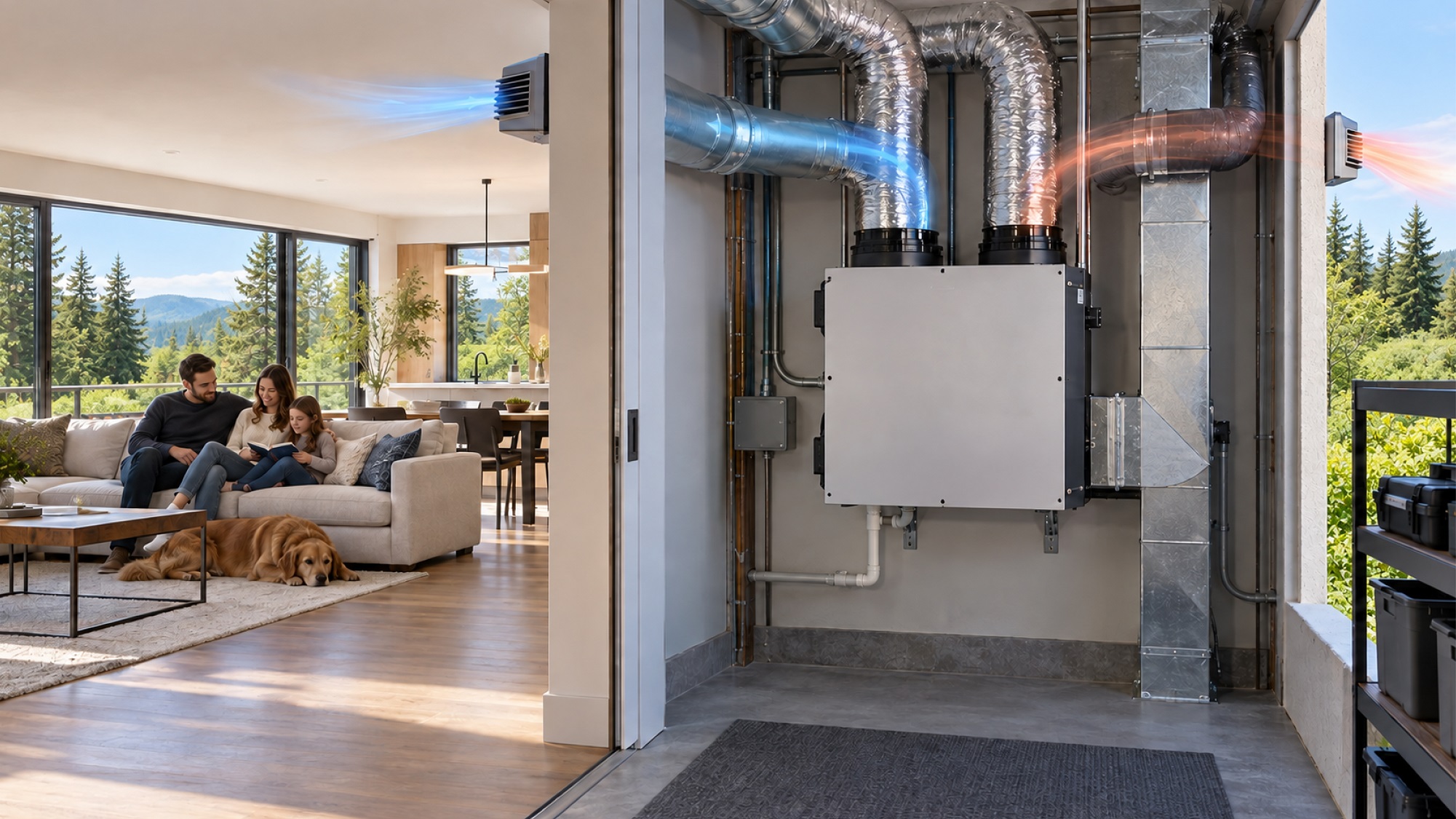
In Calgary’s cold winters, windows stay shut but stale air still needs to go somewhere. Heat recovery ventilation solves this with a continuous cycle that reclaims heat before it escapes.
The 4-Step HRV Heat Exchange Process
- ✅ Fresh outdoor air intake – Cold air enters through a dedicated supply airflow pathway.
- ✅ Stale indoor air exhaust – Indoor air exits through a separate exhaust airflow pathway, kept isolated from the supply side.
- ✅ Heat transfer through the exchanger – Both streams pass through the air-to-air heat exchanger, where thermal transfer warms the incoming air.
- ✅ Preconditioned air enters the building – Warmed fresh air is delivered indoors via the ventilation fan and ductwork.
Calgary example: A tightly sealed Calgary home keeps windows closed all winter. An HRV delivers controlled outdoor-air ventilation while recovering heat from exhaust air, courtesy of HRV ventilation solutions.
What Are the Benefits of an HRV System?
An HRV heat recovery ventilator offers more than fresh air — it’s a practical way to support comfort and air quality in tightly sealed residential and commercial buildings. Core benefits include:
- ✅ Improved indoor air quality through continuous, controlled fresh-air ventilation
- ✅ Reduced ventilation-related heat loss during colder months
- ✅ Better management of stale air and lingering odours
- ✅ Support for comfort in airtight building envelopes where natural airflow is limited
It’s worth noting that actual energy savings depend on building design, climate, equipment efficiency, and how the system is operated so results vary from home to home rather than following a fixed percentage.
How Can an HRV Improve Indoor Air Quality?
By continuously exchanging stale indoor air for fresh outdoor air, an HRV helps dilute indoor pollutants, reduce odour buildup, and maintain a healthier air exchange rate. This is especially valuable in homes with limited natural ventilation, where particulate matter and stale air can otherwise accumulate. Pairing ventilation with broader indoor air quality services can further support a consistently fresher indoor environment.
Can an HRV Reduce Heating Energy Loss?
Yes, by recovering thermal energy from outgoing exhaust air, an HRV lowers the heating load otherwise needed to warm incoming fresh air, improving overall heating efficiency. The amount of heat loss offset depends on the system’s energy recovery performance and how consistently it’s run. For homes also managing dry winter air, adding indoor humidity control alongside an HRV can further round out year-round comfort.
Is an HRV Worth It in Canada?
For most Canadian residential and commercial buildings, an HRV suits the demands of a long heating season and extended closed-window months. Whether in a windswept Alberta winter or a humid Quebec cold snap, airtight building envelopes trap moisture and pollutants indoors, making mechanical ventilation a practical solution.
Sensible heat recovery efficiency varies by unit and climate, so performance in Calgary won’t necessarily match Vancouver’s milder, damper conditions. Ventilation heat loss, heating demand, and fan electricity consumption all factor into whether an HRV makes sense best assessed case by case rather than assumed.
Who May Benefit Most From an HRV?
- ✅ Newer, energy-efficient buildings with a tightly sealed envelope
- ✅ Homes with recurring stale air or humidity buildup
- ✅ Buildings lacking reliable natural ventilation in winter
- ✅ Retrofits aiming for improved mechanical ventilation
HRV Considerations for Calgary, Toronto, Vancouver and Quebec
- ✅ Calgary, Alberta: Long, dry, cold winters typically suit HRVs well.
- ✅ Toronto, Ontario: Seasonal shifts make envelope airtightness key to performance.
- ✅ Vancouver, British Columbia: Higher humidity can shift HRV vs. ERV suitability.
- ✅ Quebec: Harsh winters raise the value of heat recovery.
Quick decision checklist:
- ✅ Newer or retrofitted airtight building?
- ✅ Windows closed for long winter stretches?
- ✅ Recurring stale air or humidity issues?
- ✅ Long or cold/humid heating season?
- ✅ Reducing ventilation-related heating demand a priority?
If several apply, an HRV is worth evaluating for your building and climate.
How Much Does an HRV Cost in Canada?
HRV pricing in Canada varies widely depending on the specific building, so the figures below should be treated as general guidance only, not fixed Proton HVAC pricing. Actual cost depends on unit capacity, ductwork requirements, electrical work, control systems, and overall installation complexity. For an accurate number, building owners should request a site-specific quotation based on their home or commercial space.
Indicative Pricing Framework (CAD)
| Cost Component | Canadian Cost Guidance |
| HRV equipment | Varies by capacity and efficiency rating |
| Professional installation | Varies by ductwork layout and installation complexity |
| Annual maintenance | Varies by service requirements and filter/component upkeep |
| Operating cost | Depends on fan runtime, motor efficiency, and local electricity rates |
| Potential savings | Depends on recovered heat, climate, and overall building efficiency |
Equipment vs. installation vs. maintenance
- ✅ Equipment cost covers the HRV unit itself, which scales with capacity and efficiency.
- ✅ Installation cost covers labour, ductwork modifications, electrical connections, and ventilation controls — all of which vary based on how straightforward or complex the building’s existing setup is.
- ✅ Maintenance cost covers ongoing filter cleaning or replacement and periodic servicing to keep the unit performing as intended.
Operating costs and savings
Operating expenses depend on fan electricity consumption, motor efficiency, and runtime. Recovered heat can offset some heating demand, but actual savings vary with climate, building performance, and usage. No fixed payback is guaranteed. Since heat recovery ventilator installation cost and HRV maintenance cost differ by property, request a locally verified quotation for accurate ventilation installation and operating expenses.
How Should You Maintain an HRV?
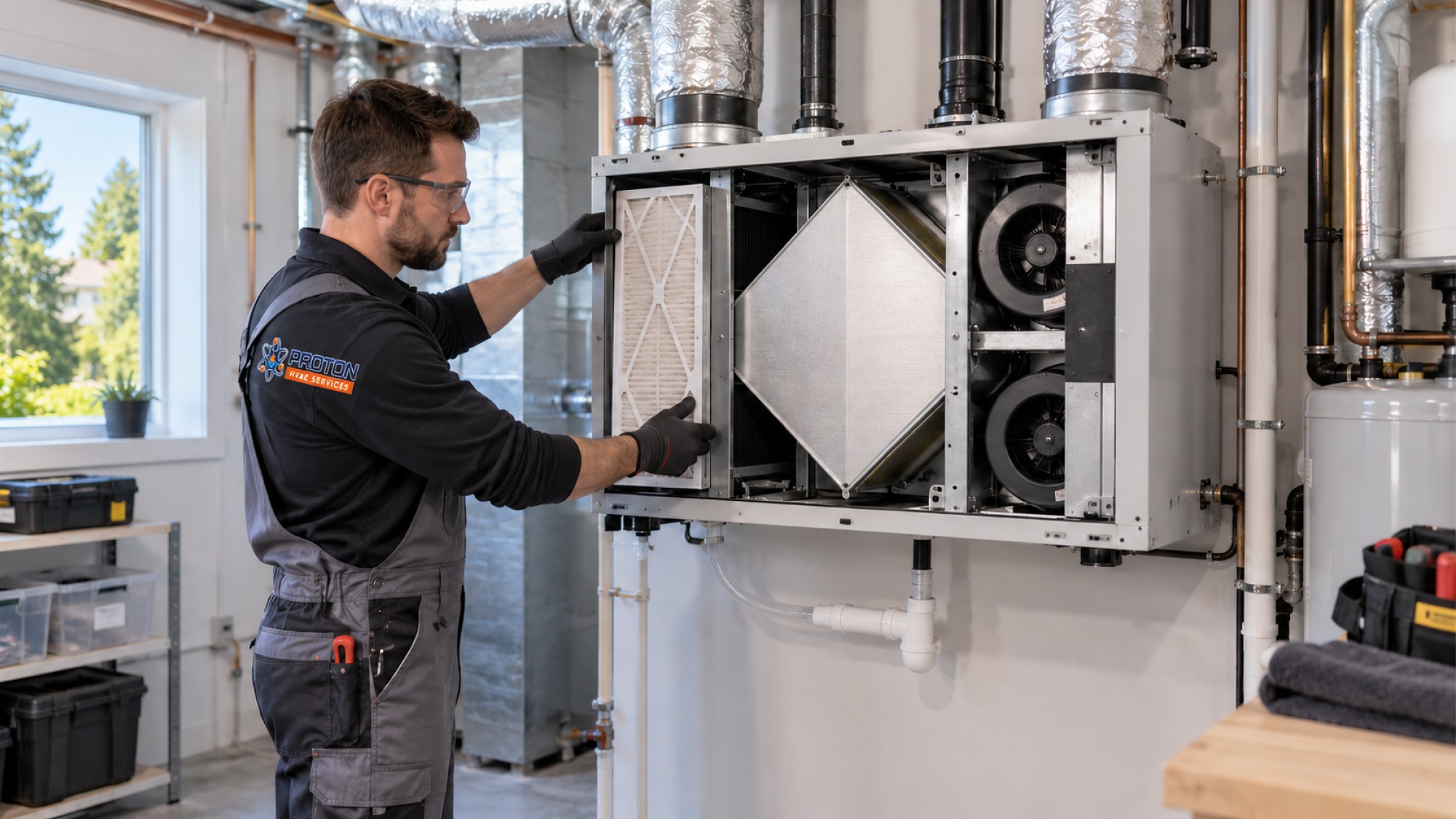
Regular HRV maintenance keeps the system running efficiently and protects indoor air quality over the long term. Neglected filters or blocked airflow can reduce performance, so a consistent maintenance routine matters as much as the initial installation.
Basic HRV Maintenance Checklist
- ✅ Inspect and clean or replace air filters on a regular basis — this is the single most common cause of reduced airflow when skipped.
- ✅ Check outdoor intake and exhaust grille openings for debris, ice, or blockages that can restrict airflow.
- ✅ Inspect the heat exchanger core periodically for dust buildup or damage that affects heat transfer.
- ✅ Check the condensate drain where applicable, ensuring it’s clear and draining properly to prevent moisture issues.
- ✅ Inspect ventilation fans and airflow balance to confirm both supply and exhaust sides are performing as expected.
- ✅ Follow manufacturer-recommended maintenance intervals for filter cleaning, core servicing, and overall inspection schedules.
If you notice reduced airflow, frost buildup on the unit, or a drop in ventilation performance, it’s best to arrange a professional inspection rather than troubleshooting alone some issues point to duct, drainage, or core problems that need hands-on diagnosis.
FAQ
Q1. What Is the Difference Between an HRV and a Standard Exhaust Fan?
A standard exhaust fan only removes air via exhaust ventilation, with no fresh-air intake or heat recovery. An HRV is a balanced mechanical ventilation system that exchanges air both ways while recovering heat.
Q2. Does an HRV Help Control Indoor Humidity in Winter?
An HRV primarily manages air exchange rather than moisture control, so its effect on winter humidity and indoor moisture is limited. For dedicated humidity and condensation control, an ERV or humidifier may suit relative humidity needs better.
Q3. How Often Should HRV Filters Be Cleaned or Replaced?
HRV filter replacement typically follows a manufacturer-set maintenance schedule, often every one to three months. Regular cleaning prevents airflow restriction and keeps the air filter performing efficiently within the ventilation system.
Q4. Can an HRV Help Prevent Condensation on Windows?
By reducing excess indoor moisture and improving air exchange, an HRV can help lower window condensation risk. Results depend on the building envelope, indoor humidity levels, and how close conditions sit to the dew point.
Q5. What Factors Affect HRV Heat Recovery Efficiency?
Heat recovery efficiency depends on the heat exchanger design, airflow rate, outdoor temperature, and maintenance condition. Sensible heat recovery performance also varies by climate, unit quality, and how consistently the system is operated.
CONCLUSION
An HRV provides controlled fresh-air ventilation while recovering heat from outgoing air, helping maintain healthier indoor air quality without the full energy penalty of ventilation heat loss. This makes it especially relevant for airtight Canadian buildings navigating long, cold heating seasons, from Calgary to Quebec. That said, not every building needs an HRV — suitability depends on construction, climate, and existing ventilation needs, which is why a building-specific assessment matters more than a blanket recommendation.
Get a free quote, book a consultation, or speak with our HVAC experts today about the right ventilation solution for your building.